Catégorie : STI2D

  • Northumberland’s Secret Coastline: A Walk Through Britain’s Forgotten History

    British coastline tourism often conjures images of Cornwall’s surf or Brighton’s piers, leaving vast stretches of the national shoreline unjustly overlooked. On the northeastern frontier of England, where the land meets the North Sea with a rugged, unapologetic posture, lies one of the nation’s most compelling historical and geographical narratives. Northumberland, England’s most sparsely populated county, offers more than its famed castles and dark skies. Its coastline is a 64-mile-long palimpsest, etched with stories of invasion, prayer, industry, and resilience. The true weight of this landscape is best understood not through isolated visits to its headline attractions, but by walking its length, connecting dots that reveal a profound continuum of British life.

    The Alnmouth Anomaly: When the River Changed Course Overnight

    Our journey of understanding begins not at a castle, but at a geographical catastrophe. The picturesque village of Alnmouth, with its pastel-coloured houses and golf links, appears the epitome of coastal serenity. Yet on Christmas Day, 1806, it was the scene of a dramatic upheaval. A colossal storm surge forced the River Aln to abandon its centuries-old course, carving a new channel to the sea and rendering the village’s once-thriving port obsolete overnight. This single event encapsulates the dynamic, shaping power of the North Sea. Walking the estuary paths today, one can still trace the ghost of the old riverbed, a humbling reminder that human settlement here has always been a temporary contract with a volatile natural world. The resilience shown by Alnmouth’s residents, who pivoted from port trade to tourism and agriculture, set a precedent for the adaptive spirit found in coastal communities all the way to Berwick.

    For those planning to explore this layered landscape in depth, a comprehensive resource for trails, lesser-known sites, and practical travel advice can be found at www.gonorthumberland.info, an essential portal for moving beyond the guidebook highlights.

    The Monastic Footpath: From Cradle to Coffin

    Long before recreational ramblers, the coastline was a highway for medieval monks. The stretch between the majestic priories of Tynemouth and Lindisfarne formed a spiritual and administrative corridor of immense importance. Monks would travel this route on foot, not merely for solitude, but for governance, carrying messages, collecting tithes, and overseeing satellite granges. The path they trod, often hugging the cliff tops for visibility and safety, later became the basis for smuggling routes and, eventually, sections of the modern England Coast Path. To walk it is to tread a sequence of purpose: from prayer at a priory, to farming at a coastal grange, to fishing from a coble boat. The ruins of medieval salt pans near Beadnell, where monks evaporated seawater for preserving fish, are a tangible, often-missed connection to this integrated monastic economy that sustained the region for centuries.

    Cobles and Keels: The Undercount of Maritime Ingenuity

    Northumberland’s maritime history is dominated by tales of the Tyne’s shipbuilding, but its coastal fishery developed a vessel of unique and brilliant design: the Northumberland cable. With a flat bottom for beaching on sandy shores, a high bow for North Sea waves, and a distinctive asymmetric hull allowing a single sailor to both haul nets and steer, the cable is a masterpiece of practical adaptation. Compare its efficiency to the larger, crew-dependent fishing smacks of the south coast: the cable allowed small, family-based enterprises to thrive in coves from Craster to Seahouses. The continued use of these boats for crab and lobster fishing represents a living heritage. This local innovation extends to the region’s role in the 18th-century coal trade, where the sturdy, shallow-draft « keel » barges were perfected for river-to-coaster transfer, a logistical step crucial to fueling London’s growth.

    Victorian Geology and the Birth of Environmental Thought

    The striated cliffs and whinstone ridges of the coast attracted more than painters; they became an open-air laboratory for 19th-century scientists. The Bamburgh Coastline, in particular, played a surprising role in the dawn of environmental conservation. In 1838, the renowned geologist William Buckland (of « dinosaur » nomenclature fame) gave a lecture to the British Association in Newcastle, using the specific layering of the Farne Islands’ rock formations to argue for a « divine design » in geological history. While his theology faded, his meticulous observation of the coast’s strata contributed to the empirical study of earth’s history. This scientific fascination directly led to early preservation efforts, as naturalists followed to study the unique birdlife of the Farnes, ultimately catalysing the protectionism that resulted in the islands becoming a National Nature Reserve. The coast shifted from a mere resource to a site of study and inherent value.

    The Defence-in-Depth Paradox: From Roman Signal Stations to Cold War Radar

    Northumberland’s coast has been a frontline for nearly two millennia, but its defensive strategy reveals a fascinating paradox. While the mighty castles of Bamburgh and Dunstanburgh are the obvious fortifications, a more nuanced system of « defence-in-depth » has been employed since Roman times. The Romans built a chain of signal stations, like the one at Scarborough, to communicate inland to the Wall. In the Napoleonic era, a network of small, limestone « warning beacons » and volunteer-built batteries like those at Amble were the first, not the last, line of defence. Most strikingly, in the Cold War, this remote coast again became strategically vital. The now-derelict radar station at RAF Brizlee Wood, hidden inland but monitoring the coastal approach, continued this ancient principle: the coast itself is the sensor, with the real defensive muscle concealed further back. This layered history makes every headland not just a viewpoint, but a sentinel post in a very long war.

    Measuring Solitude: The Economics of Empty Beaches

    In an era of overtourism, Northumberland’s coast offers a rare commodity: genuine solitude. But this emptiness has a quantifiable economic history and a fragile future. A 19th-century survey of the region bemoaned the « lack of hospitable landing places » as a cause of economic stagnation. Today, that very absence is its chief economic asset. Studies by tourism bodies show that visitors to Northumberland rate « tranquillity » and « uncrowded spaces » as top motivators, a sentiment that commands a premium. Compare the visitor density: Bournemouth’s beaches can see over 30,000 people on a peak summer day, while Druridge Bay might see a few hundred. This low-density model supports a different kind of economy—small B&Bs, artisan producers, and guided heritage walks—rather than mass-market resorts. The challenge is to monetize emptiness without destroying it, a balancing act the region’s tourism strategies continue to navigate with careful footpaths and dispersed attractions.

    The true narrative of Northumberland’s coast is one of interconnectedness. The monastic path fed the fishing coves, the geological strata informed Victorian thought which prompted conservation, and the defensive imperative shaped settlement patterns that now deliver tranquillity. It is a landscape where human history is not layered in discrete, tour-friendly chapters, but woven into a continuous, resilient fabric. To experience it properly requires time, a good pair of boots, and an eye for the subtle threads that bind a storm-tossed Christmas in 1806 to the flight of an Arctic tern over a volcanic stack today. The coast doesn’t just have a history; it is history, walking its length is to read a nation’s story written in stone, sand, and sea.

    • The Great Storm of 1806: A meteorological event that physically redrew the map at Alnmouth, demonstrating the coast’s constant state of flux.
    • The Monastic Grange System: The largely invisible economic network that connected coastal resources to inland religious power, forming the medieval backbone of the region.
    • The Northumberland Coble: An asymmetric fishing vessel representing a pinnacle of localized, problem-solving design, still in use today.
    • Buckland’s 1838 Lecture: A pivotal moment where coastal geology was used in a major scientific forum, bridging theological and emerging environmental thought.
    • The Defence-in-Depth Principle: A strategic military constant from Roman signals to Cold War radar, proving the coast’s perennial role as a national frontline.
    • The Economics of Solitude: The modern calculation of how low visitor density translates to a sustainable, high-value tourism model distinct from crowded southern resorts.
  • Idee per divertirsi insieme: attività estive da fare con il tuo cane

    Introduzione: L’importanza di divertirsi insieme al proprio cane in estate

    Con l’arrivo dell’estate, è fondamentale trovare modi per divertirsi e trascorrere del tempo di qualità con il proprio cane. Questa stagione offre un’ottima opportunità per esplorare attività all’aria aperta, come escursioni nei boschi o passeggiate lungo la spiaggia. Ogni attività non solo favorisce il benessere fisico del nostro amico a quattro zampe, ma contribuisce anche alla sua socializzazione e alla creazione di legami più forti tra noi e lui.

    Le piscine possono diventare un vero paradiso per i cani amanti dell’acqua, dove possono divertirsi e rinfrescarsi durante le calde giornate estive. Giochi acquatici, come il fetch con una palla galleggiante, sono perfetti per stimolare il loro istinto naturale e mantenerli attivi. Non dimentichiamo che il relax è altrettanto importante: stendersi all’ombra dopo una giornata di sport e attività acquatiche è un modo fantastico per ricaricare le batterie.

    Inoltre, è fondamentale considerare l’importanza di diversificare le attività. Che si tratti di giochi in giardino, uscite in montagna o semplicemente di un pomeriggio in un parco, ogni esperienza offre nuovi stimoli. Attività come il nuoto o le escursioni possono rinfrescare le giornate estive e rendere il nostro tempo insieme ancora più speciale, incoraggiando il nostro cane a rimanere attivo e felice, promuovendo un senso di benessere che durerà per tutta l’estate https://www.doggysplash.it/.

    Attività acquatiche: Giochi e sport in piscina

    Le attività acquatiche in piscina offrono un perfetto mix di divertimento e relax. Che si tratti di giochi come il pallanuoto o del più tranquillo esercizio di acquagym, le opzioni sono molteplici. La piscina diventa un luogo ideale per socializzare, soprattutto durante le calde giornate estive, dove la freschezza dell’acqua è un invito a stare insieme.

    Per chi cerca un modo attivo di divertirsi, gli sport acquatici sono una scelta eccellente. Il nuoto, ad esempio, non solo è un ottimo esercizio per il corpo, ma promuove anche il benessere mentale. Le escursioni in piscina, organizzate con amici o familiari, possono trasformarsi in una vera e propria avventura.

    Non dimentichiamo i giochi di gruppo, perfetti per stimolare la socializzazione e l’interazione. Da semplici giochi con la palla a sfide più elaborate, ogni attività diventa un’opportunità per creare ricordi indimenticabili. In questo modo, le piscine non sono solo luoghi di divertimento, ma anche spazi per il benessere e la crescita personale.

    Escursioni: Scoprire nuovi sentieri e la bellezza della natura

    Le escursioni rappresentano un’opportunità unica per immergersi nella natura e scoprire paesaggi mozzafiato. Che si tratti di una passeggiata leggera o di un trekking impegnativo, ogni sentiero offre la possibilità di esplorare la flora e la fauna locali. È importante scegliere il percorso giusto, in base alle proprie capacità e agli obiettivi: relax, avventura o semplicemente divertimento.

    Un’escursione può essere un’ottima occasione per socializzare, coinvolgendo amici e familiari in attività all’aperto. La bellezza della natura stimola conversazioni e crea ricordi indimenticabili. Inoltre, molte aree di escursione offrono percorsi attrezzati anche per attività acquatiche, come il kayak, che arricchiscono ulteriormente l’esperienza.

    Non dimentichiamo l’importanza di abbinare le escursioni con momenti di freschezza e relax, magari concedendosi una pausa per un picnic in riva a un lago o in un parco. Portare con sé giochi o attrezzature sportive può rendere la giornata ancora più divertente, trasformando una semplice camminata in una vera avventura all’insegna del benessere.

    Socializzazione: Incontri e giochi con altri cani e proprietari

    La socializzazione è fondamentale per il benessere del tuo cane. Partecipare a incontri con altri cani e proprietari offre opportunità preziose di interazione. Puoi organizzare giochi in parchi o piscine dedicate, dove i cani possono divertirsi e sfogare la loro energia.

    Le escursioni sono un’altra eccellente occasione per socializzare. Camminare insieme a altri cani e proprietari non solo promuove l’esercizio fisico, ma crea anche un ambiente di relax e freschezza.

    Inoltre, puoi considerare attività acquatiche come il nuoto, che favoriscono il divertimento e la socializzazione in un contesto unico. Organizzare eventi di sport canino può essere un modo divertente per coinvolgere tutti!

    Esercizi e freschezza: Attività per mantenere il tuo cane attivo e fresco

    Per garantire la freschezza e la vitalità del tuo cane, è fondamentale integrare attività divertenti e stimolanti nella sua routine. Le escursioni sono un’ottima scelta: oltre a favorire la socializzazione, permettono al tuo amico a quattro zampe di esplorare nuovi ambienti.

    Non dimenticare le attività acquatiche: una piscina o un lago possono trasformarsi in un parco giochi estivo ideale. Nuotare non solo è un ottimo esercizio, ma offre anche un momento di relax e divertimento. I giochi in acqua stimolano la mente e il corpo, mantenendo il tuo cane fresco e felice.

    Incorporare vari sport e esercizi giornalieri è essenziale. Prova a alternare passeggiate, corsa e sessioni di gioco nel parco. Questo mix di attività non solo migliora la salute fisica, ma contribuisce anche al benessere emotivo del tuo cane.

    Conclusione: Riflessioni sul divertimento e il relax estivo con il tuo cane

    Con l’arrivo dell’estate, è fondamentale trovare modi per garantire sia il divertimento che il relax del tuo cane. Attività come escursioni nei boschi o giochi in piscina non solo offrono freschezza, ma favoriscono anche la socializzazione e il legame tra te e il tuo amico a quattro zampe.

    Non dimenticare di integrare esercizi e sport nel tuo programma estivo. Che si tratti di attività acquatiche o semplici giochi di palla, queste esperienze stimolano la mente e il corpo del tuo cane, rendendo ogni giornata un’opportunità per divertirsi insieme.

    Infine, ricorda di scegliere momenti di relax all’ombra, dove entrambi possiate ricaricare le energie. L’estate è l’occasione perfetta per creare ricordi indimenticabili, all’insegna del divertimento e della freschezza. Goditi ogni attimo con il tuo fedele compagno!

  • Promuovi i tuoi album fotografici tramite i social media

    Introduzione alla promozione degli album fotografici sui social media

    La promozione degli album fotografici sui social media rappresenta una strategia di marketing fondamentale per i fotografi e i creativi. Con l’avvento delle piattaforme popolari come Instagram, Facebook e Pinterest, la creazione di contenuti visivi accattivanti è diventata essenziale per catturare l’attenzione del pubblico. Queste piattaforme offrono un’opportunità unica per aumentare la visibilità dei propri lavori e raggiungere un target audience specifico.

    È cruciale sviluppare campagne pubblicitarie mirate che non solo mostrino il proprio stile, ma che stimolino anche il coinvolgimento del pubblico. Interagire attivamente con gli utenti, rispondere a commenti e raccogliere feedback e recensioni aiuta a costruire un rapporto di fiducia e a rafforzare il branding personale. Inoltre, il monitoraggio delle performance delle proprie pubblicazioni consente di comprendere quali contenuti riscuotono maggiore successo.

    In questo contesto, avere una strategia ben definita è fondamentale. Ad esempio, l’uso di hashtag pertinenti e la programmazione dei post nei momenti di maggiore attività del pubblico possono notevolmente amplificare il messaggio e attrarre nuovi follower. La combinazione di creatività e analisi dei dati permette di ottimizzare continuamente la propria https://www.celebra.it/ online, garantendo una crescita costante e sostenibile nel tempo.

    Strategie di marketing efficaci per aumentare la visibilità

    Per aumentare la visibilità del tuo brand, è fondamentale implementare strategie di marketing mirate. Iniziamo dalle piattaforme popolari come Instagram e Facebook, dove la creazione di contenuti visivi accattivanti può catturare l’attenzione del tuo target audience. Utilizzare immagini di alta qualità e video coinvolgenti non solo aumenta il coinvolgimento del pubblico, ma favorisce anche una connessione emotiva con i potenziali clienti.

    Le campagne pubblicitarie su queste piattaforme possono essere personalizzate per raggiungere segmenti specifici del tuo pubblico, ottimizzando così le tue risorse. Non dimenticare di incoraggiare il feedback e le recensioni: le opinioni dei clienti sono un potente strumento di marketing che può influenzare le decisioni d’acquisto degli altri.

    Infine, è essenziale il monitoraggio delle performance delle tue strategie. Analizzare i dati ti permette di capire cosa funziona e cosa no, consentendoti di adattare le tue tecniche di marketing per massimizzare l’aumento della visibilità e migliorare il tuo branding personale.

    Piattaforme popolari per la condivisione di contenuti visivi

    Oggigiorno, le piattaforme popolari per la condivisione di contenuti visivi giocano un ruolo cruciale nelle strategie di marketing. Utilizzando canali come Instagram, Pinterest e TikTok, le aziende possono raggiungere il proprio target audience in modo efficace, promuovendo la creazione di contenuti visivi accattivanti. Questi strumenti non solo aiutano a catturare l’attenzione, ma favoriscono anche un maggiore coinvolgimento del pubblico.

    Ad esempio, Instagram è ideale per le campagne pubblicitarie che vogliono valorizzare il branding personale. Le storie e i post sponsorizzati offrono la possibilità di mostrare i prodotti in modo creativo, aumentando la visibilità del marchio. D’altra parte, Pinterest consente di raccogliere feedback e recensioni attraverso pin e board tematiche, creando una community di utenti interessati.

    Inoltre, TikTok ha rivoluzionato il modo in cui le marche interagiscono con il pubblico. Le sfide virali e i video creativi possono generare un notevole aumento della visibilità e del coinvolgimento. Monitorare le performance su queste piattaforme è essenziale per adattare le strategie e ottimizzare i contenuti, assicurando che il messaggio raggiunga il pubblico desiderato.

    In sintesi, scegliere le giuste piattaforme per la condivisione di contenuti visivi è fondamentale per il successo delle campagne di marketing. Con la giusta combinazione, le aziende possono non solo promuovere i loro prodotti, ma anche costruire relazioni durature con i loro clienti.

    Coinvolgimento del pubblico: come interagire con la tua target audience

    Il coinvolgimento del pubblico è fondamentale per qualsiasi strategia di marketing efficace. Per raggiungere la tua target audience, è essenziale utilizzare piattaforme popolari come social media e blog. La creazione di contenuti visivi accattivanti può catturare l’attenzione e stimolare interazioni significative.

    Le campagne pubblicitarie mirate possono amplificare il tuo messaggio, aumentando la visibilità del tuo brand. Non dimenticare di incoraggiare il feedback e le recensioni; questi strumenti ti offrono preziose informazioni per adattare le tue strategie e migliorare il tuo approccio.

    Infine, il monitoraggio delle performance è cruciale. Analizza i dati per capire quali contenuti generano più coinvolgimento e ottimizza le tue iniziative in base a queste intuizioni. Un approccio dinamico garantirà che tu rimanga in sintonia con le esigenze della tua audience, rafforzando il tuo branding personale.

    Monitoraggio delle performance e analisi dei feedback e recensioni

    Il monitoraggio delle performance è cruciale per affinare le strategie di marketing. Attraverso l’analisi delle recensioni e dei feedback del pubblico, è possibile comprendere meglio le esigenze della target audience. Piattaforme popolari come Google Analytics possono fornire dati preziosi sul coinvolgimento del pubblico.

    Le campagne pubblicitarie devono essere costantemente valutate. Ad esempio, se un contenuto visivo non genera interazioni, potrebbe essere necessario rivedere la sua creazione. L’aumento della visibilità passa anche attraverso l’ascolto attivo del pubblico, che offre spunti per migliorare il branding personale.

    In conclusione, il monitoraggio delle performance e l’analisi dei feedback non solo ottimizzano le strategie, ma favoriscono anche un legame più forte con gli utenti, rendendo ogni azione più efficace e mirata.

  • Comprendre la volatilité des jeux chez Lucky8 : informations essentielles

    Introduction à la volatilité des jeux chez Lucky8

    La volatilité des jeux est un concept fondamental pour les joueurs en ligne, en particulier chez Lucky8. Elle se réfère à la manière dont les gains sont distribués au sein des différents jeux. Comprendre cette catégorisation des jeux est essentiel pour adapter sa stratégie de jeu et maximiser ses chances de succès. Par exemple, les machines à sous à haute volatilité offrent des gains potentiels plus élevés mais avec un risque accru, tandis que celles à faible volatilité garantissent des gains fréquents mais moins conséquents.

    Les implications sur les gains sont donc directement liées à la volatilité. Un joueur avisé doit évaluer son profil de joueur et ses préférences des utilisateurs pour choisir le type de jeu qui correspond à son style. Par ailleurs, il est crucial de prendre en compte les risques associés à chaque catégorie de jeu. Un bon joueur adopte des stratégies de jeu judicieuses et ajuste son approche en fonction de l’analyse des performances observées.

    Enfin, l’importance du retour au joueur (RTP) ne doit pas être sous-estimée. Un RTP élevé peut compenser la volatilité élevée, tandis qu’un RTP faible peut rendre un jeu peu attrayant. Pour ceux qui souhaitent maximiser leurs gains, des casino en ligne lucky8 sur la gestion de bankroll et l’ajustement de l’approche de jeu sont nécessaires pour naviguer efficacement dans cet univers varié.

    Catégorisation des jeux et leur impact sur la volatilité

    La catégorisation des jeux joue un rôle crucial dans la compréhension de la volatilité et des implications sur les gains. Les jeux peuvent être classés en plusieurs catégories, chacune ayant des niveaux de risque associés différents. Par exemple, les machines à sous à forte volatilité peuvent offrir des gains substantiels, mais avec des périodes de pertes prolongées, tandis que les jeux à faible volatilité fournissent des gains plus réguliers, mais moins spectaculaires.

    Les profils de joueurs influencent également ces choix. Les joueurs à la recherche de sensations fortes peuvent préférer les jeux à forte volatilité, tandis que ceux qui privilégient la sécurité opteront pour des options plus stables. Il est donc essentiel d’adapter ses stratégies de jeu en fonction de ces préférences.

    En outre, l’importance du retour au joueur (RTP) doit être prise en compte. Un RTP élevé peut atténuer les risques associés aux jeux à forte volatilité, mais nécessite une analyse approfondie des performances et des ajustements d’approche pour maximiser les chances de succès. Ainsi, des conseils pratiques sur la gestion de bankroll et le choix des jeux peuvent aider les joueurs à naviguer dans cet univers complexe.

    Risques associés et implications sur les gains

    Dans le monde des jeux, la catégorisation des jeux joue un rôle crucial dans la compréhension des risques associés et de leurs implications sur les gains. Chaque type de jeu présente des défis uniques, nécessitant des stratégies de jeu adaptées aux profils de joueurs. Par exemple, les jeux de table, tels que le poker, demandent une analyse des performances pour maximiser les gains, tandis que les machines à sous reposent davantage sur la chance.

    Les préférences des utilisateurs peuvent également influencer le risque. Un joueur ayant un penchant pour l’adrénaline peut opter pour des jeux à haut risque, acceptant la volatilité pour des gains potentiels élevés. En revanche, un joueur prudent privilégiera des options à faible risque, où l’importance du retour au joueur est primordiale.

    Il est donc essentiel d’adopter des ajustements d’approche basés sur son style de jeu. En intégrant des conseils pratiques comme la gestion de bankroll et la définition de limites, les joueurs peuvent naviguer efficacement ces risques tout en maximisant leurs gains potentiels.

    Stratégies de jeu adaptées aux différents profils de joueurs

    La catégorisation des jeux est essentielle pour adapter les stratégies de jeu aux différents profils de joueurs. Par exemple, un joueur occasionnel pourrait privilégier des jeux avec une faible volatilité, tandis qu’un joueur expérimenté pourrait rechercher des jeux à haute variance, attiré par les implications sur les gains.

    Les préférences des utilisateurs influencent également les choix de jeux. Un joueur stratégique, par exemple, analysera ses performances et ajustera son approche en fonction des résultats obtenus. En revanche, un joueur récréatif pourrait se concentrer davantage sur le divertissement, sans trop se soucier des risques associés.

    Il est crucial d’intégrer des conseils pratiques pour chaque type de joueur. Pour les novices, il est conseillé de commencer avec des jeux offrant un retour au joueur (RTP) élevé, tandis que les joueurs plus aguerris pourraient explorer des titres avec des mécaniques plus complexes. Cela permet de maximiser l’expérience tout en minimisant les pertes potentielles.

    Importance du retour au joueur et ajustements d’approche

    Le retour au joueur (RTP) est essentiel dans la catégorisation des jeux, car il influence directement les implications sur les gains. En comprenant le RTP, les joueurs peuvent mieux évaluer les risques associés à différents jeux et adapter leurs stratégies de jeu.

    Les profils de joueurs varient, tout comme leurs préférences des utilisateurs. Par exemple, un joueur à la recherche de gains rapides peut privilégier des jeux avec un RTP élevé, tandis qu’un autre peut être attiré par des titres offrant une expérience immersive, même avec un RTP plus faible.

    Pour maximiser les chances de succès, il est crucial d’intégrer des ajustements d’approche basés sur l’analyse des performances. Cela implique d’évaluer régulièrement ses résultats et d’ajuster les paris ou les jeux choisis selon son expérience. Voici quelques conseils pratiques :

    • Étudiez le RTP des jeux avant de jouer.
    • Testez différents types de jeux pour trouver ceux qui correspondent à votre style.
    • Établissez un budget et respectez-le pour gérer vos risques.

    En résumé, comprendre le retour au joueur et faire des ajustements stratégiques sont des éléments clés pour optimiser l’expérience de jeu et augmenter les chances de gains à long terme.

    Conseils pratiques et analyse des performances pour maximiser les gains

    Pour optimiser vos gains, une catégorisation des jeux est essentielle. Chaque type de jeu a des implications sur les gains et des risques associés. Par exemple, les machines à sous offrent des retours au joueur variables, ce qui influe sur la stratégie de mise.

    Il est crucial d’adapter vos stratégies de jeu selon votre profil de joueur et vos préférences des utilisateurs. Les joueurs prudents peuvent privilégier des jeux à faible variance, tandis que les aventuriers pourraient se tourner vers des options plus risquées mais potentiellement plus lucratives.

    Une analyse des performances régulière vous permettra d’identifier les ajustements d’approche nécessaires. Suivez vos résultats, notez les jeux qui fonctionnent le mieux pour vous et ajustez vos mises en conséquence. Ces conseils pratiques peuvent transformer votre expérience de jeu.

  • Connecting with Finbarr’s Digital Community

    Introduction to Finbarr’s Digital Community

    In today’s fast-paced digital landscape, building a robust social media presence is paramount for brands like Finbarr. This community serves as a vibrant hub for information sharing and customer interactions, allowing users to connect with the brand on a deeper level. By leveraging various platforms, Finbarr fosters an environment where audience connection is not just encouraged but celebrated.

    Event announcements play a crucial role in this digital ecosystem. They not only inform the community about upcoming happenings but also enhance the brand’s image by showcasing its commitment to engagement. For instance, when Finbarr hosted its annual conference, the buzz generated on social media amplified participation and excitement, demonstrating the effectiveness of strategic online engagement.

    Moreover, the community plays a crucial role in shaping Finbarr’s marketing strategies. Through active participation and feedback, members help refine digital initiatives that enhance the brand’s social media presence. This two-way communication not only builds loyalty but also ensures that the brand evolves in sync with its audience’s needs, fostering deeper connections and encouraging information sharing within the community https://www.finbarrsrestaurant.co.uk/.

    The Importance of Social Media Presence for Community Engagement

    In today’s digital landscape, a strong social media presence is essential for effective community engagement. It serves as a dynamic platform for information sharing, allowing organizations to announce events, promote initiatives, and connect with their audience in real-time. For instance, a local nonprofit can utilize platforms like Facebook or Instagram to share updates on upcoming fundraisers, ensuring that community members are informed and excited to participate.

    Moreover, customer interactions on social media foster a sense of belonging among followers. When brands actively respond to comments or messages, they humanize their image, enhancing their brand image and encouraging loyalty. This direct line of communication not only strengthens community building but also provides valuable insights into audience preferences, enabling more effective marketing strategies.

    Additionally, social media acts as a powerful tool for online engagement. By sharing user-generated content, organizations can create a two-way dialogue that deepens the audience connection. For example, a coffee shop might invite customers to share their favorite drink moments, showcasing their community’s enthusiasm while enhancing brand visibility. In this way, social media is not just about outreach; it’s about creating a vibrant community that thrives on shared experiences.

    Strategies for Effective Event Announcements and Customer Interactions

    In today’s fast-paced digital landscape, a robust social media presence is essential for effective event announcements and fostering meaningful customer interactions. Begin by leveraging platforms like Facebook, Instagram, and Twitter to create buzz around your events. Consider using eye-catching visuals or short videos that encapsulate the event’s essence. For example, a local music festival can share snippets from past performances to build excitement and anticipation.

    Another effective strategy is to engage your audience directly through polls or questions related to the event. This not only enhances online engagement but also strengthens your brand image by demonstrating that you value their input. Additionally, creating a dedicated event page allows for streamlined information sharing, providing attendees with all necessary details in one place.

    To deepen your community building efforts, encourage attendees to share their experiences before, during, and after the event. User-generated content can serve as powerful testimonials, enhancing your reach while creating a genuine audience connection. Remember, effective marketing strategies hinge on fostering relationships, not just transactions.

    Building a Strong Brand Image Through Online Engagement

    In today’s digital landscape, a robust online engagement strategy is vital for cultivating a strong brand image. Your social media presence acts as a dynamic platform for customer interactions, allowing brands to share event announcements and connect meaningfully with their audience. This engagement fosters community building, where customers feel valued and part of something greater.

    Effective marketing strategies should include regular updates and information sharing that resonate with your target audience. For instance, hosting Q&A sessions or live events can enhance audience connection and drive brand loyalty. Brands like Nike and Starbucks exemplify this by actively engaging with their communities, turning casual followers into loyal advocates.

    Moreover, your digital initiatives should focus on creating a dialogue rather than a monologue. Responding to comments, addressing concerns, and celebrating customer stories can strengthen your brand image. Remember, each interaction is an opportunity to reinforce your values and mission, ultimately shaping how your audience perceives your brand.

    Best Practices for Information Sharing and Audience Connection

    Building a strong social media presence is essential for effective information sharing. Regularly post engaging content, such as event announcements or behind-the-scenes glimpses, to enhance audiance connection. This fosters trust and encourages customer interactions.

    Utilize marketing strategies that promote online engagement. For instance, host live Q&A sessions or interactive polls to gather feedback. These initiatives not only enhance your brand image but also empower your community, turning followers into loyal advocates.

    Community building is key. Create dedicated spaces for discussions, such as forums or groups, where users can share experiences and ideas. This not only drives information sharing but also strengthens relationships with your audience, fostering long-term loyalty.

    Lastly, analyze engagement metrics to refine your approach. Understanding what resonates with your audience allows you to tailor content effectively, ensuring your digital initiatives align with their interests and needs.

  • Wie Stresstests Systemausfälle bei Verkehrsspitzen verhindern

    Stellen Sie sicher, dass Ihre Netzwerkinfrastruktur jederzeit stabil bleibt. Durch regelmäßige Simulationen können Sie die Widerstandsfähigkeit Ihres Systems in Zeiten hoher Benutzeraktivität testen. Erkennen Sie Schwachstellen und verbessern Sie die Stabilität Ihrer Systeme, bevor es zu kritischen Engpässen kommt.

    Durch gezielte Belastungstests identifizieren Sie mögliche Probleme und erhöhen die Leistung Ihrer Dienste. Schützen Sie sich vor unerwarteten Spitzenlasten und gewährleisten Sie einen reibungslosen Betrieb für Ihre Kunden. Sichere Systeme bedeuten zufriedene Benutzer und nachhaltigen Erfolg.

    Die Bedeutung von Stresstests für die Systemstabilität

    Regelmäßige Belastungstests sichern die Robustheit Ihrer Netzwerkinfrastruktur. Sie ermöglichen es, Schwächen und potenzielle Ausfälle zu identifizieren, bevor sie in kritischen Momenten zu ernsten Problemen führen. Dies schafft ein höheres Maß an Sicherheit und Vertrauen in die Systeme, die für den Geschäftsbetrieb entscheidend sind.

    Durch das gezielte Testen intensiver Verkehrsspitzen werden Reaktionen des Systems analysiert. Solche Szenarien bieten wertvolle Einblicke, wie stabil die Infrastruktur unter Druck ist. Erkenntnisse aus diesen Tests helfen dabei, die Leistung zu optimieren und Ausfälle zu minimieren.

    Ein gut durchdachter Testansatz ermöglicht es, Engpässe rechtzeitig zu erkennen und zu beheben. Dies wirkt sich nicht nur auf die Stabilität aus, sondern steigert auch die Zufriedenheit der Benutzer. Ein System, das stabil bleibt, bietet eine bessere Nutzererfahrung in Zeiten hoher Nachfrage.

    Angesichts der ständigen Veränderungen im Nutzerverhalten ist es unerlässlich, regelmäßige Tests durchzuführen. Diese Praktiken sind nicht nur eine momentane Notwendigkeit, sondern auch eine kontinuierliche Strategie zur Verbesserung der Netzwerkinfrastruktur. Proaktive Maßnahmen garantieren, dass Systeme für zukünftige Herausforderungen gut aufgestellt sind.

    Zusammenfassend kann gesagt werden, dass das Testen unter extremen Bedingungen ein unverzichtbarer Bestandteil der Systempflege darstellt. Hohe Stabilität schützt vor unerwarteten Ausfällen, bewahrt die Integrität der Daten und sichert die Wettbewerbsfähigkeit im Markt. Investieren Sie in regelmäßige Tests, um einen reibungslosen Betrieb zu gewährleisten.

    Wie man realistische Traffic-Spitzen für Stresstests erstellt

    Erstellen Sie ein detailliertes Lastprofil, das spezifische Nutzungsmuster Ihrer Anwendung widerspiegelt. Berücksichtigen Sie saisonale Trends, Werbung und geplante Inhalte. Stellen Sie sicher, dass Ihre Daten die gesamte Nutzerbasis repräsentieren.

    • Analysieren Sie historische Daten zur Nutzung.
    • Identifizieren Sie Zeiten mit höherer Nutzeraktivität.
    • Berücksichtigen Sie verschiedene Endgeräte und Standortvariationen.

    Führen Sie eine sorgfältige Planung der netzwerkinfrastruktur durch. Stellen Sie sicher, dass alle Komponenten, vom Server bis zum Router, zur Bewältigung hoher Lasten ausgelegt sind. Passen Sie die Infrastruktur entsprechend der prognostizierten Traffic-Spitzen an.

    1. Verwenden Sie Load Balancer zur Verteilung des Verkehrs.
    2. Implementieren Sie Caching-Mechanismen, um die Antwortzeiten zu verkürzen.
    3. Verlagern Sie Inhalte auf Content Delivery Networks (CDNs) zur Verbesserung der Zugänglichkeit.

    Testen Sie verschiedene Szenarien, um die Stabilität Ihrer Anwendungen unter unterschiedlichen Bedingungen zu prüfen. Simulieren Sie plötzliche Anstiege im Verkehr im Verhältnis zu einer realistischen Anzahl von Nutzern, um ein klares Bild der Belastung zu erhalten.

    Nutzen Sie spezialisierte Softwaretools zur Erzeugung von Traffic-Spitzen. Diese Programme helfen, realistische Traffic-Muster zu generieren und bieten eine große Flexibilität in den Testkonfigurationen. Achten Sie darauf, dass auch ungewöhnliche Belastungen berücksichtigt werden.

    Analysieren Sie die Ergebnisse Ihrer Tests gründlich. Überprüfen Sie, ob die netzwerkinfrastruktur den Anforderungen standhält, und optimieren Sie die Systemressourcen basierend auf den gefundenen Schwachstellen.

    Analyse von Testergebnissen zur Verbesserung der Systemleistung

    Eine detaillierte Auswertung der Testergebnisse bietet wertvolle Einblicke in die Leistungsfähigkeit der Netzwerkinfrastruktur. Dabei sollten spezifische Leistungskennzahlen wie Antwortzeiten und Durchsatzraten besonders beachtet werden. Durch gezielte Anpassungen basierend auf diesen Analysen können Engpässe identifiziert und beseitigt werden, was zu einer signifikanten Steigerung der Stabilität und Effizienz des Systems führt.

    Zusätzlich ermöglicht die Untersuchung von Schwankungen und Anomalien während der Tests, kritische Punkte zu erkennen, die unter realen Bedingungen zu Problemen führen könnten. Das Verständnis der dynamischen Interaktionen innerhalb des Systems hilft dabei, präventive Maßnahmen zu entwickeln, die künftige Lastspitzen besser bewältigen. Ein robustes und reaktionsschnelles System ist nicht nur stabiler, sondern auch besser auf unerwartete Anforderungen vorbereitet.

    Abschließend ist es entscheidend, regelmäßige Tests nicht nur als einmalige Maßnahme zu betrachten, sondern als fortlaufenden Prozess. Durch kontinuierliches Monitoring und Nachjustieren können die Systeme nicht nur verbessert, sondern auch langfristig gesichert werden. Die Analyse dieser Tests schafft somit eine solide Grundlage für nachhaltige Optimierungen in der gesamten Netzwerkinfrastruktur.

    Fallstudien: Erfolgreiche Implementierung von Stresstests in Unternehmen

    Die gezielte Durchführung von Belastungstests bietet Unternehmen die Möglichkeit, die Robustheit ihrer Netzwerkinfrastruktur zu stärken. Ein Beispiel hierfür ist ein mittelständisches Unternehmen im E-Commerce-Bereich, das durch die Durchführung von Tests vor der Eröffnung einer neuen Verkaufsplattform massive Probleme bei Kundenanfragen vermeiden konnte. Die Simulation von hohen Zugriffszahlen half dabei, Engpässe frühzeitig zu identifizieren und anzugehen.

    Ein internationales Finanzdienstleistungsunternehmen setzte ebenfalls auf solche Prüfungen, um die Stabilität seiner Systeme während außergewöhnlicher Marktbedingungen zu garantieren. Dank präventiver Maßnahmen und der Analyse von Testergebnissen war es in der Lage, in kritischen Momenten reibungslos zu operieren, was das Vertrauen der Kunden deutlich steigerte. Das Unternehmen profitiert heute von einer optimierten Leistung und minimierten Ausfallzeiten.

    Unternehmen Branche Testergebnisse Verbesserungen erzielt
    E-Commerce GmbH E-Commerce 99,9% Verfügbarkeit Optimierung der Serverkonfiguration
    Finanzdienstleister AG Finanzen 95% Stabilität während Spitzenzeiten Reduzierung der Reaktionszeiten um 50%

    Ein weiteres Beispiel ist ein Unternehmen im Bereich Online-Glücksspiel, das die Dienste https://betalice-casino.net/ nutzt. Hier wurden durch eingehende Tests vor dem Launch des neuen Spiels unerwartete Schwächen in der Netzwerkinfrastruktur aufgedeckt. Das Team konnte gezielt Anpassungen vornehmen, um eine reibungslose Spielerfahrung für die Nutzer zu garantieren und so die Abbruchrate signifikant zu senken.

    Fragen und Antworten:

    Warum sind Stresstests wichtig für die Vermeidung von Systemausfällen?

    Stresstests sind entscheidend, weil sie potenzielle Schwachstellen in einem System aufdecken, bevor sie ernsthafte Probleme verursachen. Durch Simulation von Traffic-Spitzen können Unternehmen sicherstellen, dass ihre Systeme auch unter Druck stabil bleiben und weiterhin ordnungsgemäß funktionieren. Dadurch wird das Risiko von Ausfällen während kritischer Zeiten minimiert.

    Wie oft sollten Stresstests durchgeführt werden?

    Die Häufigkeit von Stresstests hängt von der Art des Systems und der Geschäftstätigkeit ab. In der Regel sollten sie mindestens vierteljährlich durchgeführt werden, insbesondere vor wichtigen Ereignissen oder jährlichen Hochlastzeiten. Regelmäßige Tests helfen dabei, systematische Veränderungen oder Updates zu berücksichtigen und Sicherheiten zu schaffen.

    Welches sind die Hauptvorteile von Stresstests für Online-Geschäfte?

    Die Hauptvorteile von Stresstests umfassen die frühzeitige Identifikation von Problemen, die Verbesserung der Systemstabilität und des Kundenerlebnisses sowie die Erhöhung des Vertrauens in die IT-Infrastruktur. Online-Geschäfte können dadurch sicherstellen, dass sie während intensiver Traffic-Spitzen nicht nur funktionsfähig bleiben, sondern auch den Kunden einen reibungslosen Zugriff auf Dienstleistungen und Produkte bieten können.

    Können Stresstests auch zur Verbesserung der Benutzererfahrung beitragen?

    Ja, Stresstests können erheblich zur Verbesserung der Benutzererfahrung beitragen. Indem sie Aufschlüsse über mögliche Engpässe und Leistungsmängel geben, können Unternehmen nicht nur ihre Systeme optimieren, sondern auch sicherstellen, dass Nutzer eine angenehme und störungsfreie Interaktion mit der Plattform haben. Eine gut funktionierende Website, besonders zu Stoßzeiten, ist entscheidend für die Kundenzufriedenheit.

  • Exploring the Lifecycle of Metal Materials in Construction Projects

    Introduction to Metal Materials in Construction

    Metal materials have become a cornerstone in modern construction, offering a blend of strength, durability, and versatility. From steel beams supporting skyscrapers to aluminum frames in residential homes, the use of metals is driven by various design considerations that enhance structural integrity and aesthetic appeal. Their manufacturing processes, such as welding and forging, allow for innovative designs that can meet the demanding needs of contemporary architecture.

    Installation practices for metal components require skilled labor and adherence to regulatory compliance to ensure safety and efficiency. Proper maintenance requirements, including regular inspections and corrosion protection, play a crucial role in extending the lifespan of metal structures. Moreover, as sustainability becomes increasingly important, the economic impact of using recyclable metals offers end-of-life options that align with eco-friendly practices.

    The ongoing innovation in metal materials continues to transform the construction industry, making it essential for professionals to stay informed about quality control measures and advancements in https://www.canalengineering.co.uk/ practices. By understanding these facets, architects and builders can make informed choices that not only meet client expectations but also promote sustainable development in our built environment.

    Design Considerations for Metal Materials

    When selecting metal materials for a project, several design considerations must come into play. The choice of metal can significantly influence manufacturing processes, installation practices, and overall project success. For instance, stainless steel is favored in environments where corrosion resistance is critical, while aluminum is often chosen for its lightweight properties and ease of fabrication.

    Quality control measures are essential throughout the design phase to ensure the integrity of metal components. Regular inspections during manufacturing help detect any flaws early, reducing long-term maintenance requirements. Additionally, incorporating sustainability into the design process is increasingly important, as it addresses both regulatory compliance and the economic impact of materials used.

    End-of-life options should also be considered. Metals are highly recyclable, which can enhance a project’s sustainability profile. Innovations in metal design, such as advanced alloys or composite materials, offer exciting opportunities to improve performance while meeting strict regulatory standards.

    Manufacturing Processes and Quality Control

    Manufacturing processes are the backbone of any production operation, influencing everything from design considerations to installation practices. Effective quality control is essential to ensure that products meet regulatory compliance and sustainability standards. For instance, incorporating innovative technologies, like automation and advanced analytics, can significantly enhance quality assurance protocols, leading to a reduction in defects and waste.

    Consider the example of the automotive industry, where rigorous testing and quality control checkpoints are integrated throughout the manufacturing process. This ensures that every vehicle not only meets safety standards but also aligns with the economic impact of production costs and market demand.

    Moreover, manufacturers must also pay attention to maintenance requirements and end-of-life options for their products. A proactive approach to maintenance can extend product lifespan, reducing overall costs and promoting sustainability. As companies navigate these complexities, the commitment to quality control becomes a crucial differentiator in a competitive market.

    Installation Practices and Maintenance Requirements

    Effective installation practices are crucial for ensuring optimal performance and longevity of any system. Proper design considerations must be taken into account, such as environmental factors and space constraints. Adhering to regulatory compliance guidelines during installation not only promotes safety but also enhances sustainability.

    Maintenance requirements should be systematically outlined, focusing on routine checks and preventive measures. For example, regular inspection and quality control can significantly reduce the economic impact of unplanned downtime. Understanding the manufacturing processes behind the components can also aid in selecting suitable maintenance strategies.

    As systems reach their end-of-life, it’s essential to explore responsible end-of-life options, including recycling or repurposing materials, which aligns with sustainable practices in modern design.

    End-of-Life Options and Sustainability in Metal Construction

    As sustainability becomes a critical focus in construction, metal structures must consider end-of-life options. Effective design considerations and manufacturing processes can facilitate recycling, reducing landfill waste and promoting resource efficiency.

    Installation practices that prioritize modularity can enhance a building’s longevity while simplifying future deconstruction. Regular maintenance requirements also play a key role in prolonging the lifespan of metal constructions, ultimately minimizing economic impact.

    Moreover, aligning with regulatory compliance not only ensures safety but also promotes innovative approaches to sustainability. By embracing quality control at every stage, from production to decommissioning, we can significantly enhance the environmental footprint of metal construction.

    The Economic Impact and Regulatory Compliance in Metal Use

    The economic impact of metal use is profound, shaping industries through design considerations and manufacturing processes. Compliance with regulations ensures not only safety but also sustainability, influencing installation practices and maintenance requirements.

    For instance, industries must adapt to stringent regulations governing emissions and waste. This drives innovation, pushing companies to explore eco-friendly materials and end-of-life options that minimize environmental footprints.

    Moreover, effective quality control throughout the metal lifecycle can enhance product longevity, reducing costs associated with repairs and replacements. By prioritizing regulatory compliance, businesses can create competitive advantages while contributing to a sustainable economy.

  • Techniques de marketing ciblées pour luckys-8-fr.com

    Introduction aux techniques de marketing ciblées

    Dans un monde où la concurrence est de plus en plus féroce, les entreprises doivent adopter des stratégies de marketing plus précises et efficaces. L’une des méthodes les plus prometteuses est le marketing ciblé, qui permet de concentrer les efforts de promotion sur des segments spécifiques de la clientèle. En s’appuyant sur des données démographiques, comportementales et psychographiques, les marques peuvent mieux comprendre les besoins de leur public et ajuster leurs messages en conséquence.

    Par exemple, une entreprise de cosmétiques peut choisir de cibler les jeunes femmes intéressées par des produits bio, en créant des campagnes spécifiquement conçues pour ce groupe. Cette approche non seulement augmente l’acquisition de nouveaux clients, mais améliore également la fidélité des clients existants.

    Le marketing ciblé repose sur l’analyse des données. Les outils d’analyse permettent aux entreprises de segmenter leur audience et d’identifier les tendances. Cela entraîne des campagnes de promotion https://luckys-8-fr.com/, augmentant ainsi le retour sur investissement. En fin de compte, les marques qui maîtrisent ces techniques peuvent se démarquer et construire des relations durables avec leurs clients.

    Importance de la promotion dans la stratégie d’acquisition

    Dans un paysage commercial en constante évolution, la promotion joue un rôle crucial dans toute stratégie d’acquisition. Elle permet de faire connaître vos produits et services à un public ciblé, augmentant ainsi les chances de conversion. Par exemple, une campagne de marketing ciblée sur les réseaux sociaux peut générer un engagement significatif, attirant de nouveaux clients potentiels.

    La promotion ne se limite pas à la publicité payante. Des tactiques telles que le marketing de contenu, les e-mails personnalisés ou les promotions saisonnières peuvent également contribuer à renforcer votre visibilité. En utilisant des outils d’analyse, vous pouvez ajuster vos efforts promotionnels en temps réel pour maximiser leur efficacité.

    Une approche holistique, intégrant différentes méthodes de promotion, permet de toucher une audience plus large tout en respectant le budget. En définitive, une promotion bien pensée est essentielle pour toute entreprise cherchant à améliorer sa stratégie d’acquisition et à se démarquer dans un marché concurrentiel.

    Analyse des données pour une marketing ciblée efficace

    Dans le monde du marketing moderne, l’analyse des données est devenue un pilier fondamental pour élaborer une stratégie de promotion efficace. Grâce à des outils d’analyse avancés, les entreprises peuvent désormais comprendre les comportements et les préférences de leurs clients, permettant ainsi de créer des campagnes de marketing plus ciblées.

    Par exemple, en étudiant les données démographiques et les habitudes d’achat, une entreprise peut identifier des segments de marché spécifiques à cibler. Cela peut se traduire par des actions concrètes, comme l’envoi d’offres personnalisées, augmentant ainsi les chances d’acquisition de nouveaux clients.

    De plus, l’analyse des données permet d’ajuster en temps réel les campagnes en cours. En surveillant les performances, il devient possible de modifier les messages ou les canaux utilisés pour maximiser l’impact. Cette approche dynamique assure une meilleure rentabilité des investissements en marketing.

    En somme, une bonne utilisation des données ne se limite pas à la collecte, mais vise à transformer ces informations en actions concrètes pour une promotion véritablement ciblée.

    Outils et plateformes pour optimiser vos campagnes

    Pour réussir vos campagnes de marketing, il est essentiel de choisir les bons outils et plateformes. Parmi les plus utilisés, Google Ads offre des solutions de promotion ciblée qui vous permettent d’atteindre votre audience de manière efficace. En ajustant vos enchères et en sélectionnant des mots-clés pertinents, vous maximisez votre retour sur investissement.

    Les réseaux sociaux, comme Facebook et Instagram, sont également des alliés précieux pour l’acquisition de nouveaux clients. Grâce à des options de ciblage avancées, vous pouvez élaborer des stratégies de contenu engageantes qui résonnent avec votre public.

    Enfin, des outils d’analyse comme Google Analytics vous offrent des insights précieux sur le comportement des utilisateurs, permettant d’affiner vos campagnes en temps réel. En intégrant ces outils dans votre stratégie, vous améliorez vos chances de succès et vous assurez une promotion efficace de vos produits ou services.

    Études de cas : succès de marketing ciblé dans l’industrie

    Dans l’univers du marketing, les études de cas illustrent parfaitement l’impact d’une stratégie ciblée. Prenons l’exemple d’une entreprise de cosmétiques qui a utilisé des promotions personnalisées pour attirer une clientèle spécifique. En analysant les données démographiques, elle a pu adapter sa communication et ses offres, augmentant ainsi son acquisition de clients.

    Un autre cas marquant est celui d’une marque de vêtements qui a mis en place une campagne de marketing ciblé sur les réseaux sociaux. Grâce à une analyse approfondie des comportements d’achat, elle a pu proposer des promotions sur les produits les plus recherchés, entraînant une hausse significative des ventes.

    Ces exemples montrent clairement que la clé du succès réside dans l’adaptation des stratégies de marketing aux besoins spécifiques des consommateurs. En investissant dans une approche ciblée, les entreprises peuvent non seulement améliorer leur visibilité, mais également renforcer leur relation avec leur clientèle. Cela illustre l’importance d’une promotion bien pensée dans l’acquisition et la fidélisation des clients.

    Conclusion et recommandations pour luckys-8-fr.com

    Pour maximiser l’impact de luckys-8-fr.com, une stratégie d’acquisition ciblée est essentielle. En investissant dans des promotions attractives et en améliorant le marketing digital, le site peut atteindre un public plus large et fidéliser ses visiteurs.

    Il est crucial d’analyser les données utilisateurs afin d’affiner les campagnes marketing. Par exemple, des offres personnalisées basées sur le comportement des utilisateurs peuvent considérablement augmenter le taux de conversion.

    Finalement, diversifier les canaux de communication, comme les réseaux sociaux et le marketing par e-mail, permettra de renforcer la visibilité de la marque. En mettant en œuvre ces recommandations, luckys-8-fr.com pourra se démarquer dans un marché compétitif.

  • Najciekawsze wydarzenia żeglarskie na świecie – Co zobaczyć?

    Wprowadzenie do żeglarstwa i jego kultury

    Żeglarstwo to nie tylko pasja, ale także styl życia, który łączy ludzi z różnych zakątków świata. Od wieków przyciąga entuzjastów, oferując im możliwość rywalizacji oraz odkrywania piękna natury na wodzie. Wydarzenia takie jak regaty i festiwale żeglarskie przyciągają uczestników i widzów, a ich różnorodność sprawia, że każdy może znaleźć coś dla siebie.

    W polskiej kulturze żeglarstwo ma swoje głębokie korzenie, a jeziora i morza stają się areną rywalizacji oraz miejscem spotkań pasjonatów. Klasy żeglarskie, które różnią się pod względem konstrukcji i przeznaczenia, stają się podstawą wielu zawodów. Od klasycznych jachtów po nowoczesne katamarany – każda trasa staje się wyzwaniem, które przyciąga zarówno doświadczonych żeglarzy, jak i nowicjuszy.

    Oprócz rywalizacji, żeglarstwo to także doskonała okazja do integracji społeczności lokalnych. Festiwale żeglarskie organizowane w popularnych miejscach, takich jak Mazury, oferują atrakcje dla całych rodzin. Uczestnicy mogą nie tylko podziwiać zmagania na wodzie, ale również korzystać z warsztatów i pokazów, które promują wartości związane z https://bitwaogotland.pl/ kulturą żeglarską. To wszystko sprawia, że żeglarstwo staje się nieodłącznym elementem polskiej tradycji i nowoczesności.

    Najważniejsze regaty na świecie

    W świecie żeglarstwa, regaty stanowią nie tylko platformę dla rywalizacji, ale także święto kultury i tradycji. Wydarzenia te przyciągają uczestników z różnych klas i poziomów doświadczenia, oferując niezapomniane trasy oraz atrakcje, które pozostają w pamięci na długo. Wśród najważniejszych regat na świecie wyróżnia się America’s Cup, który od 1851 roku łączy najlepszych żeglarzy w zaciętej rywalizacji. To nie tylko zawody, ale także symbol innowacji technologicznych w żeglarstwie.

    Kolejnym niezwykle prestiżowym wydarzeniem są regaty Volvo Ocean Race. Trasa tej imprezy prowadzi przez najtrudniejsze akweny świata, co czyni ją prawdziwym testem dla uczestników. Każda edycja jest pełna emocji, a rywalizacja na morzu przyciąga uwagę zarówno fanów, jak i mediów.

    Nie można zapomnieć również o Festiwalu Żeglarstwa w Cannes, który łączy regaty z wydarzeniami kulturalnymi. To doskonała okazja, by zobaczyć najnowsze modele jachtów oraz nawiązać międzynarodowe kontakty. Wydarzenia te są nie tylko o rywalizacji, ale także o pasji do żeglarstwa i wspólnej miłości do morza.

    Ostatecznie, regaty to znacznie więcej niż tylko zmagania na wodzie. To wydarzenia, które jednoczą ludzi, celebrują kulturę żeglarstwa i promują wartości takie jak przyjaźń oraz współpraca. W każdej z tych imprez odnajdujemy niepowtarzalną atmosferę, która sprawia, że żeglarstwo staje się prawdziwą sztuką życia.

    Festiwale żeglarskie – święto dla miłośników

    Festiwale żeglarskie to prawdziwe święto dla miłośników żeglarstwa, gdzie pasja spotyka się z rywalizacją. Te wydarzenia przyciągają zarówno profesjonalnych żeglarzy, jak i amatorów, oferując niezapomniane emocje oraz możliwość uczestnictwa w regatach. W Polsce, organizowane są festiwale w malowniczych miejscach, takich jak Mazury czy Trójmiasto, gdzie trasy regat prowadzą przez najpiękniejsze zakątki.

    Podczas festiwali można podziwiać różnorodność klas jachtów, co sprawia, że każdy znajdzie coś dla siebie. Uczestnicy mają szansę na rywalizację w różnych kategoriach, co dodaje jeszcze więcej emocji do całego wydarzenia. Dodatkowo, festiwale żeglarskie to nie tylko regaty, ale także bogata oferta atrakcji, jak koncerty, warsztaty czy pokazy sprzętu żeglarskiego.

    Warto wspomnieć, że festiwale te sprzyjają integracji społeczności żeglarskiej oraz promują kulturę żeglarską w Polsce. Dzięki nim, pasjonaci mogą dzielić się swoimi doświadczeniami i nawiązywać nowe znajomości. Udział w festiwalu to doskonała okazja, by poczuć magię żeglarstwa i odkryć nowe trasy, które zachwycają zarówno widokami, jak i wyzwaniami.

    Klasy żeglarskie i ich znaczenie w rywalizacji

    Klasy żeglarskie odgrywają kluczową rolę w organizacji wydarzeń i regat, umożliwiając żeglarzom rywalizację na równych zasadach. Każda klasa ma swoje specyfikacje, co pozwala na dostosowanie sprzętu do umiejętności uczestników. W ten sposób żeglarstwo staje się bardziej sprawiedliwe i ekscytujące.

    W Polsce, popularne klasy, takie jak Optimist czy Laser, są często obecne na festiwalach żeglarskich, przyciągając zarówno zawodników, jak i widzów. Dzięki różnorodnym trasom i atrakcji, te imprezy stają się świętem kultury żeglarskiej, integrując społeczność oraz promując nowe talenty.

    Rywalizacja w różnych klasach sprzyja rozwojowi umiejętności i strategii, co jest niezbędne dla sukcesu na międzynarodowej arenie. Uczestnictwo w regatach w różnych klasach staje się nie tylko wyzwaniem, ale także sposobem na nawiązywanie cennych znajomości w świecie żeglarstwa.

    Atrakcje i trasy żeglarskie, które warto zobaczyć

    Żeglarstwo to nie tylko sport, ale także sposób na odkrywanie piękna natury i kultury. W Polsce odbywają się liczne wydarzenia, takie jak regaty czy festiwale, które przyciągają miłośników żeglugi z różnych zakątków kraju. Warto zwrócić uwagę na trasy żeglarskie na Mazurach, gdzie rywalizacja i uczestnictwo w regatach są niezwykle popularne.

    Jednym z najważniejszych miejsc jest Jezioro Śniardwy, gdzie można podziwiać malownicze widoki oraz spotkać żeglarzy różnych klas. W okolicy odbywają się również liczne festiwale, które łączą żeglarstwo z lokalną kulturą, oferując atrakcje zarówno na wodzie, jak i na lądzie.

    Nie można zapomnieć o Gdańsku, gdzie co roku organizowane są regaty, w których uczestniczą zarówno amatorzy, jak i profesjonalni żeglarze. To doskonała okazja, by poczuć ducha rywalizacji i zanurzyć się w żeglarskiej atmosferze.

    Każda z tych tras to nie tylko wyzwanie, ale także niezapomniane przeżycia, które wzbogacą Twoje żeglarskie doświadczenia.

  • Appli cardioMove Appel robot et reset

    TUTO PAS À PAS – APPLI CARTE + GPS + APPEL ROBOT + RESET

    1) Créer le projet

    1. Ouvre MIT App Inventor.
    2. Clique sur Create Apps.
    3. Clique sur Start new project.
    4. Nom du projet : CardioMoveRobot

    2) Dans Designer : ajouter les composants

    2.1 Composants visibles

    Ajoute ces composants dans Screen1 :

    A. Une carte

    Dans Maps :

    • Map
    • renomme-la : Map1

    B. Marqueur téléphone

    Dans Maps :

    • Marker
    • renomme-le : MarkerMe

    C. Marqueur robot

    Dans Maps :

    • Marker
    • renomme-le : MarkerRobot

    D. Titre

    Dans User Interface :

    • Label
    • renomme-le : LabelTitle

    E. Statut

    Dans User Interface :

    • Label
    • renomme-le : LabelStatus

    F. Bouton appel

    Dans User Interface :

    • Button
    • renomme-le : ButtonAppel

    G. Bouton reset

    Dans User Interface :

    • Button
    • renomme-le : ButtonReset

    2.2 Composants non visibles

    Ajoute :

    Sensors

    • LocationSensor
    • renomme : LocationSensor1

    Connectivity

    • Web
    • renomme : Web1
    • Web
    • renomme : WebRobot
    • Web
    • renomme : WebReset

    Sensors

    • Clock
    • renomme : Clock1
    • Clock
    • renomme : ClockRobot

    User Interface

    • Notifier
    • renomme : Notifier1

    3) Régler les propriétés dans Designer

    3.1 Screen1

    Sélectionne Screen1 :

    • AlignHorizontal = Center
    • Scrollable = false

    3.2 Map1

    Sélectionne Map1 :

    • Width = Fill parent
    • Height = 300 pixels
    • ZoomLevel = 15

    3.3 MarkerRobot

    Sélectionne MarkerRobot :

    • Visible = false

    3.4 LabelTitle

    Sélectionne LabelTitle :

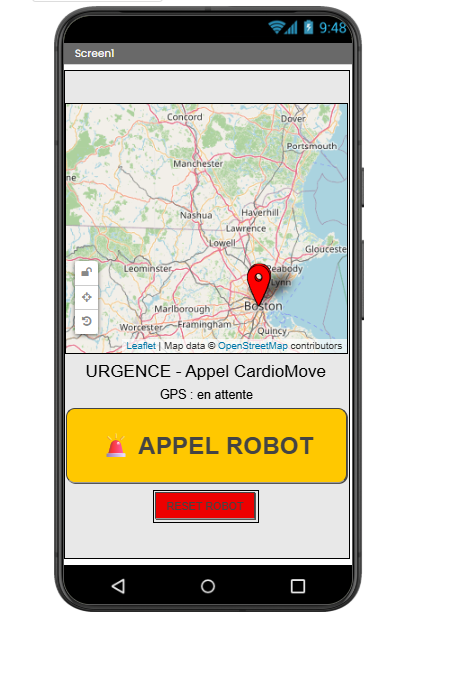
    • Text = URGENCE - Appel CardioMove
    • Width = Fill parent
    • TextAlignment = Center
    • FontSize = 18

    3.5 LabelStatus

    Sélectionne LabelStatus :

    • Text = GPS : en attente
    • Width = Fill parent
    • TextAlignment = Center

    3.6 ButtonAppel

    Sélectionne ButtonAppel :

    • Text = 🚨 APPEL ROBOT
    • Width = Fill parent
    • Height = 70 pixels
    • FontSize = 24
    • Enabled = false

    3.7 ButtonReset

    Sélectionne ButtonReset :

    • Text = RESET ROBOT

    3.8 Clock1

    Sélectionne Clock1 :

    • TimerEnabled = true
    • TimerInterval = 500

    3.9 ClockRobot

    Sélectionne ClockRobot :

    • TimerEnabled = true
    • TimerInterval = 2000

    Va dans Blocks.

    4) Créer les variables globales

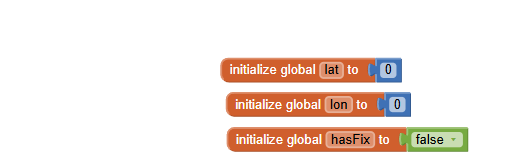
    Crée ces 5 variables :

    initialize global lat to 0
    initialize global lon to 0
    initialize global hasFix to false
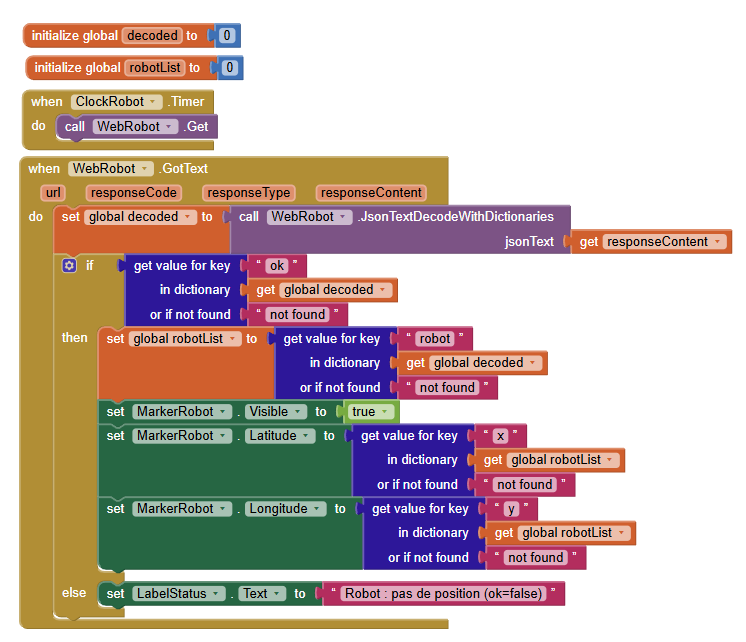
    initialize global decoded to 0
    initialize global robotList to 0

    5) Initialisation de l’écran

    Ajoute ce bloc :

    when Screen1.Initialize
    do
    set WebRobot.Url to "https://sti2d.latelier22.fr/fiber/api/robot-last"

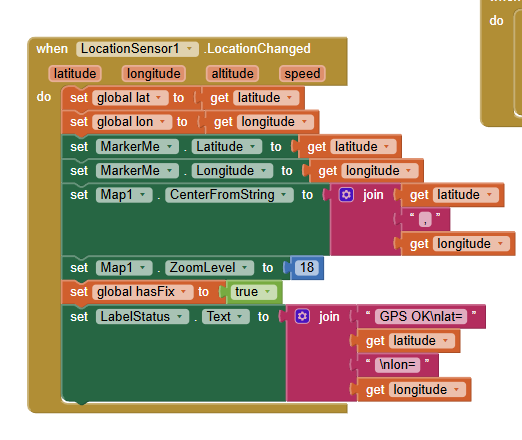
    6) Bloc GPS : récupérer la position du téléphone

    Ajoute ce bloc :

    when LocationSensor1.LocationChanged
    latitude longitude altitude speed
    do
    set global lat to get latitude
    set global lon to get longitude set MarkerMe.Latitude to get latitude
    set MarkerMe.Longitude to get longitude set Map1.CenterFromString to join get latitude "," get longitude
    set Map1.ZoomLevel to 18 set global hasFix to true set LabelStatus.Text to join
    "GPS OK\nlat="
    get latitude
    "\nlon="
    get longitude

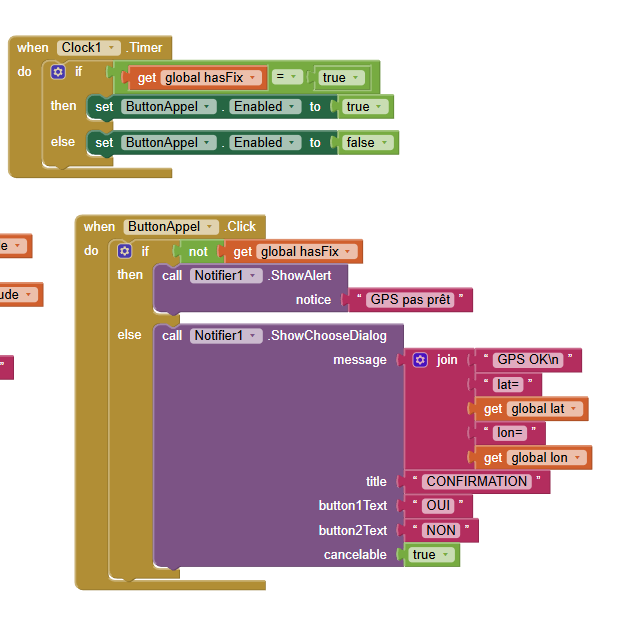
    7) Activer le bouton seulement si le GPS est prêt

    Ajoute ce bloc :

    when Clock1.Timer
    do
    if get global hasFix = true
    then
    set ButtonAppel.Enabled to true
    else
    set ButtonAppel.Enabled to false

    8) Quand on clique sur APPEL ROBOT

    Ajoute ce bloc :

    when ButtonAppel.Click
    do
    if not get global hasFix
    then
    call Notifier1.ShowAlert
    notice "GPS pas prêt"
    else
    call Notifier1.ShowChooseDialog
    message join
    "GPS OK\nlat="
    get global lat
    "\nlon="
    get global lon
    title "CONFIRMATION"
    button1Text "OUI"
    button2Text "NON"
    cancelable true

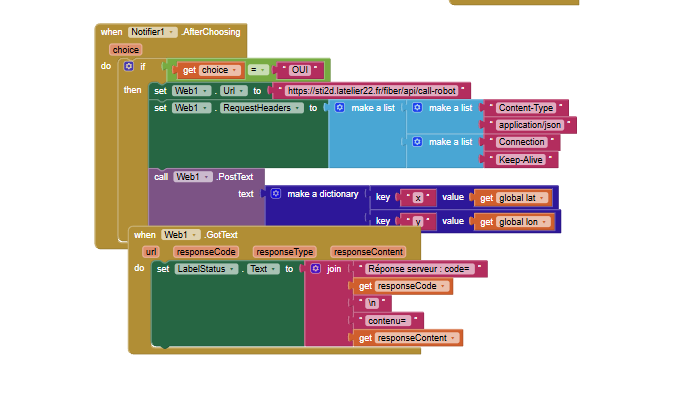
    9) Après la boîte de dialogue : envoyer les coordonnées

    Ajoute ce bloc :

    when Notifier1.AfterChoosing
    choice
    do
    if get choice = "OUI"
    then
    set Web1.Url to "https://sti2d.latelier22.fr/fiber/api/call-robot" set Web1.RequestHeaders to make a list
    make a list "Content-Type" "application/json"
    make a list "Connection" "Keep-Alive" call Web1.PostText
    text call Web1.JsonTextEncode
    valueToEncode make a dictionary
    key "x" value get global lat
    key "y" value get global lon

    10) Lire la réponse après l’appel robot

    Ajoute ce bloc :

    when Web1.GotText
    url responseCode responseType responseContent
    do
    set LabelStatus.Text to join
    "Réponse serveur : code="
    get responseCode
    "\ncontenu="
    get responseContent

    11) Lire automatiquement la position du robot

    Ajoute ce bloc :

    when ClockRobot.Timer
    do
    call WebRobot.Get

    12) Décoder le JSON du robot et placer le marqueur

    Ajoute ce bloc :

    when WebRobot.GotText
    url responseCode responseType responseContent
    do
    set global decoded to call WebRobot.JsonTextDecodeWithDictionaries
    jsonText get responseContent if get value for key "ok"
    in dictionary get global decoded
    or if not found false
    then
    set global robotList to get value for key "robot"
    in dictionary get global decoded
    or if not found create empty dictionary set MarkerRobot.Visible to true set MarkerRobot.Latitude to get value for key "x"
    in dictionary get global robotList
    or if not found 0 set MarkerRobot.Longitude to get value for key "y"
    in dictionary get global robotList
    or if not found 0
    else
    set LabelStatus.Text to "Robot : pas de position"

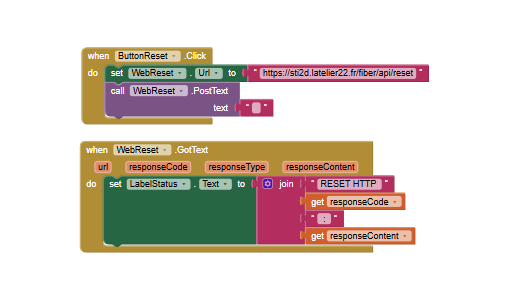
    13) Bouton RESET ROBOT

    Ajoute ce bloc :

    when ButtonReset.Click
    do
    set WebReset.Url to "https://sti2d.latelier22.fr/fiber/api/reset"
    call WebReset.PostText
    text ""

    14) Réponse après RESET

    Ajoute ce bloc :

    when WebReset.GotText
    url responseCode responseType responseContent
    do
    set LabelStatus.Text to join
    "RESET HTTP "
    get responseCode
    " : "
    get responseContent

    15) Résultat attendu

    Quand tu lances l’appli :

    1. la carte s’affiche
    2. le téléphone récupère son GPS
    3. MarkerMe se place sur la carte
    4. le bouton APPEL ROBOT s’active
    5. si tu cliques dessus, une confirmation s’ouvre
    6. si tu choisis OUI, l’appli envoie :
    {"x": latitude, "y": longitude}
    1. toutes les 2 secondes, l’appli lit /robot-last
    2. MarkerRobot se met à la position du robot
    3. le bouton RESET ROBOT envoie un POST vers /reset

    16) Les 3 URL à recopier exactement

    Appel robot

    https://sti2d.latelier22.fr/fiber/api/call-robot

    Position robot

    https://sti2d.latelier22.fr/fiber/api/robot-last

    Reset robot

    https://sti2d.latelier22.fr/fiber/api/reset

    17) Si ça ne marche pas

    Le bouton APPEL ROBOT reste grisé

    Vérifie que ce bloc existe bien :

    when LocationSensor1.LocationChanged
    ...
    set global hasFix to true

    Le robot n’apparaît pas

    Vérifie :

    • WebRobot.Url
    • ClockRobot.TimerEnabled = true
    • MarkerRobot.Visible passe à true
    • les clés "x" et "y" sont bien lues

    Erreur d’envoi JSON

    Dans Web1.PostText, il faut bien utiliser :

    call Web1.JsonTextEncode

    et pas envoyer le dictionnaire brut.


    18) Ordre exact des blocs à faire

    Fais-les dans cet ordre :

    1. variables globales
    2. Screen1.Initialize
    3. LocationSensor1.LocationChanged
    4. Clock1.Timer
    5. ButtonAppel.Click
    6. Notifier1.AfterChoosing
    7. Web1.GotText
    8. ClockRobot.Timer
    9. WebRobot.GotText
    10. ButtonReset.Click
    11. WebReset.GotText

    19) Noms exacts des composants

    Recopie bien ces noms :

    Map1
    MarkerMe
    MarkerRobot
    LabelTitle
    LabelStatus
    ButtonAppel
    ButtonReset
    LocationSensor1
    Web1
    WebRobot
    WebReset
    Clock1
    ClockRobot
    Notifier1

    20) Le plus important

    Les blocs sont en anglais, donc tu dois retrouver exactement :

    when LocationSensor1.LocationChanged
    when Clock1.Timer
    when ButtonAppel.Click
    when Notifier1.AfterChoosing
    when Web1.GotText
    when ClockRobot.Timer
    when WebRobot.GotText
    when ButtonReset.Click
    when WebReset.GotText